


The Abandoned Hibernia Iron Mines & St. Patrick's Cemetery
- Aug 23, 2024
- 2 min read
Hibernia, New Jersey

Hibernia, New Jersey, has a long mining history that dates all the way back to the 18th century ⛏️
Mining operations began in Hibernia in 1722, with the opening of Adventure Furnace, later renamed the Hibernia Furnace. During the Revolutionary War, this furnace played a crucial role in producing ammunition for the Continental Army.

In the late 1800s, the Hibernia mines were home to a number of independent mining companies. Owners of these mines began merging their activities around 1863, resulting in the formation of the Hibernia Mine Railroad. This railroad was intended to transport ore from the Hibernia mines to the Morris Canal. Subsequently, it expanded to connect with other railroads for improved ore movement beyond the Morris Canal.
The Glendon Iron Co., which operated mines in Hibernia, drilled the Glendon Tunnel in 1873. This tunnel was designed to connect all mining processes and facilitate underground transit of mined ore. By 1876, tracks had been built in the tunnel for approximately 1.5 miles, establishing the Hibernia Underground Railroad.
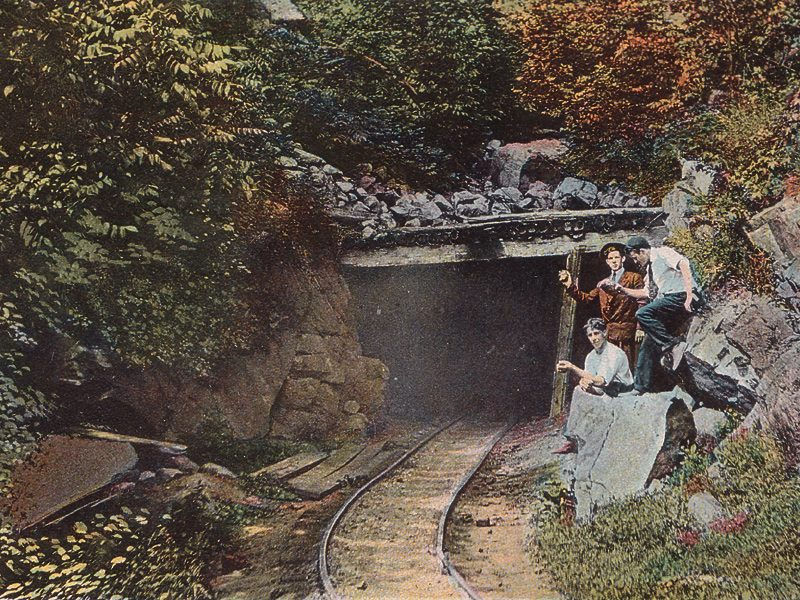
The adit to the Hibernia mine in 1907. Photo courtesy of ironminers.com
As the early 1900s approached, ore reserves began to decline. Joseph Wharton purchased the remaining mining companies, resulting in the closing of the Hibernia mines a few years later when Wharton expanded his railroad. The Hibernia mines closed in 1916 after producing approximately 5.2 million tons of ore, with the deepest shaft reaching roughly 2,800 feet.
To get to Hibernia Mine, take a brief 0.10-mile walk along the Four Birds Trail (white). While on this trail, be sure to explore the abandoned mine structures along the way. As you get near the mine, you’ll feel the air getting cooler, letting you know you’re close by.

As you continue on the Four Birds Trail, just a short but very steep hike up the hill leads you to St. Patrick's Cemetery - a small, remote graveyard.

In 1865, Our Lady of Mount Carmel, a Catholic church in Boonton, wanted to build a parish in Hibernia. The church decided to relocate the original wooden structure of Mount Carmel to Hibernia to build St. Patrick's Church (A pretty impressive feat, even by today’s standards!)
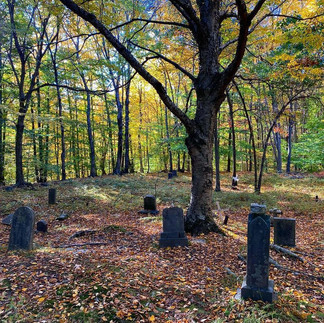
The cemetery was established a few years later in 1869 and is the final resting place for over 400 miners and their families who worked in the surrounding iron mines. The miners buried here came from all over the world, but the majority were Irish and Hungarian immigrants.

St. Patrick’s church, which maintained the cemetery, burned down in 1910 and was never rebuilt. As a result, the cemetery fell into disrepair. Headstones were broken or missing (sadly, only 40 headstones have been recovered), and the grounds became overgrown with weeds and trees.
In 2017, the Friendly Sons of St. Patrick (FSSP) in Morris County undertook a cleanup and partial restoration project. Previously, the Rockaway Historical Society and local Boy Scouts troops have also contributed to cleaning up the cemetery. According to their website, the FSSP intends to continue to maintain it at least twice a year.

While you’re at Wildcat Ridge WMA, I also highly recommend hiking to Hawk Watch Overlook. There are great panoramic views of the surrounding area, and on a clear day, you should be able to see the NYC skyline!




Comments